ABA Therapy App (B2C): Enhancing parent engagement
Project overview
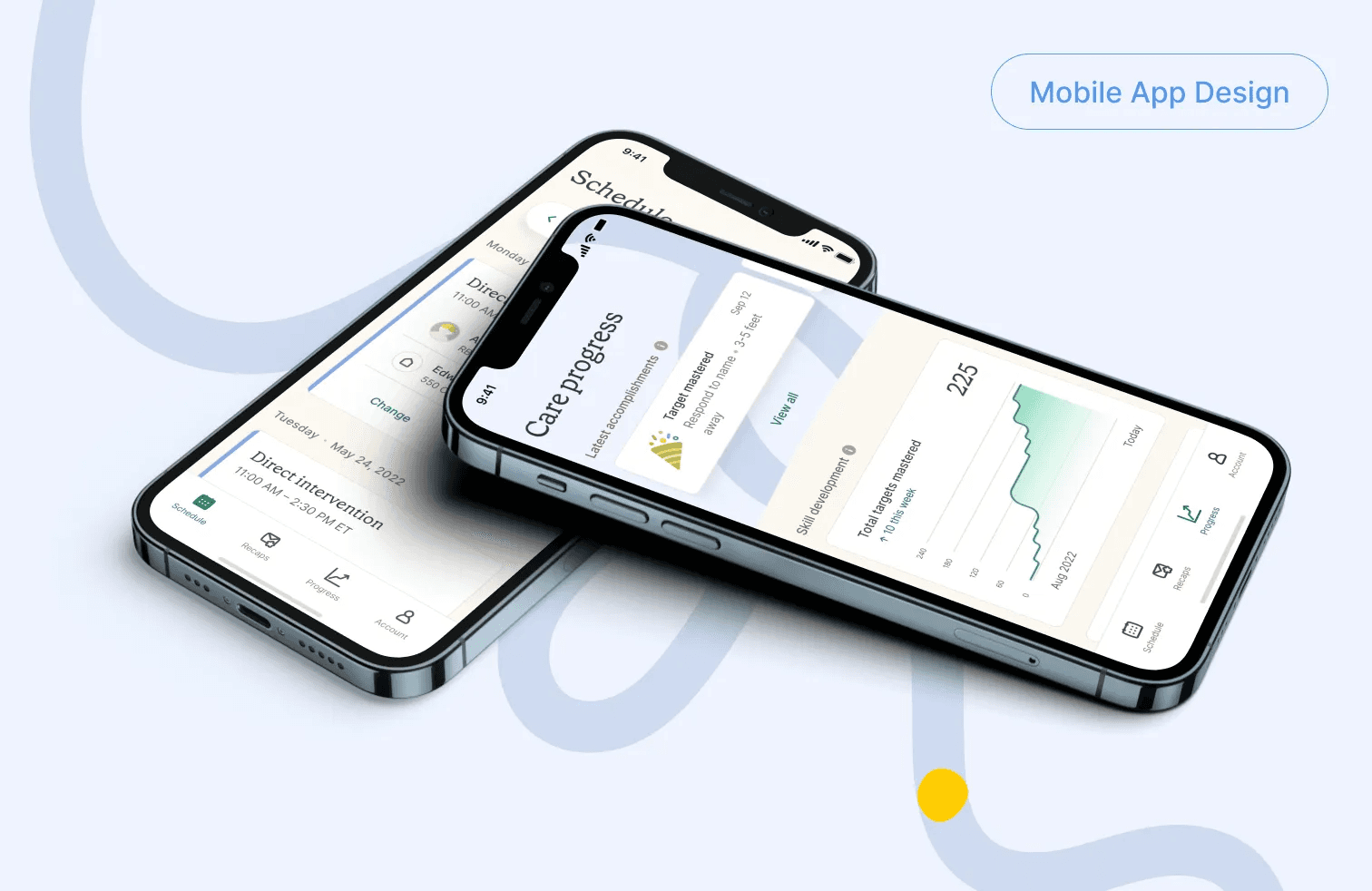
Parents play a critical role in the success of ABA therapy, yet engagement often drops when progress feels unclear or slow. This project focused on designing a caregiver-facing mobile app that helps parents better understand therapy outcomes, stay aligned with clinicians, and remain engaged throughout a long and emotionally demanding process.
Outcome: Improved caregiver understanding of clinical progress, reduced coordination overhead for care teams, and increased sustained engagement during ongoing therapy.
My role
End-to-end product design (problem framing, interaction design, validation), working closely with PM, clinicians, and engineering.
Core design challenge: making progress understandable without being overwhelming
ABA therapy progress is often gradual, non-linear, and difficult to interpret. Parents frequently struggle to assess whether their child is improving, while therapists spend significant time translating clinical language into everyday terms.
The challenge was to visualize clinical outcomes in a way that:
Creates transparency and trust
Supports emotional reassurance without false optimism
Avoids overwhelming caregivers with complex metrics and terminology
This required balancing clinical accuracy with clarity and emotional safety.
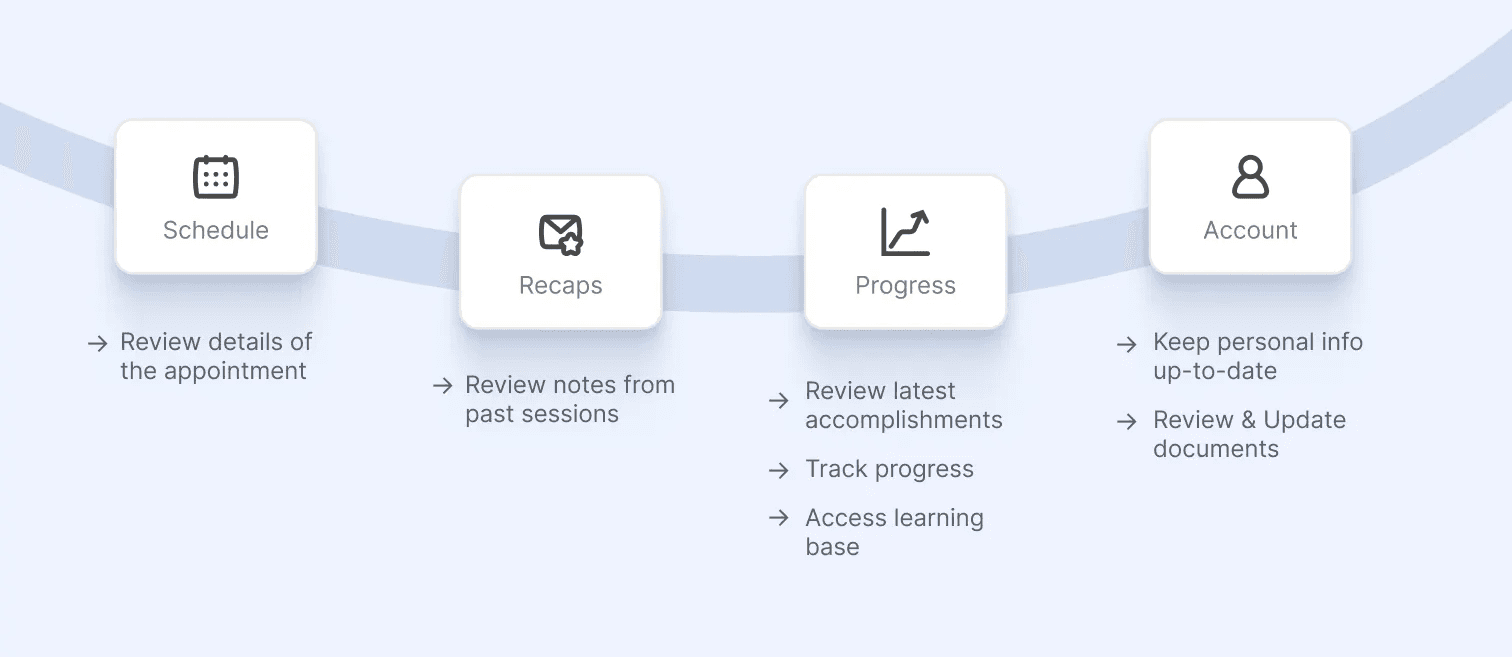
Designing a mobile app as a central communication hub for caregivers
The app was designed as a single point of communication between caregivers and care teams, supporting:
Therapy progress updates
Scheduling and coordination
Ongoing alignment outside of therapy sessions
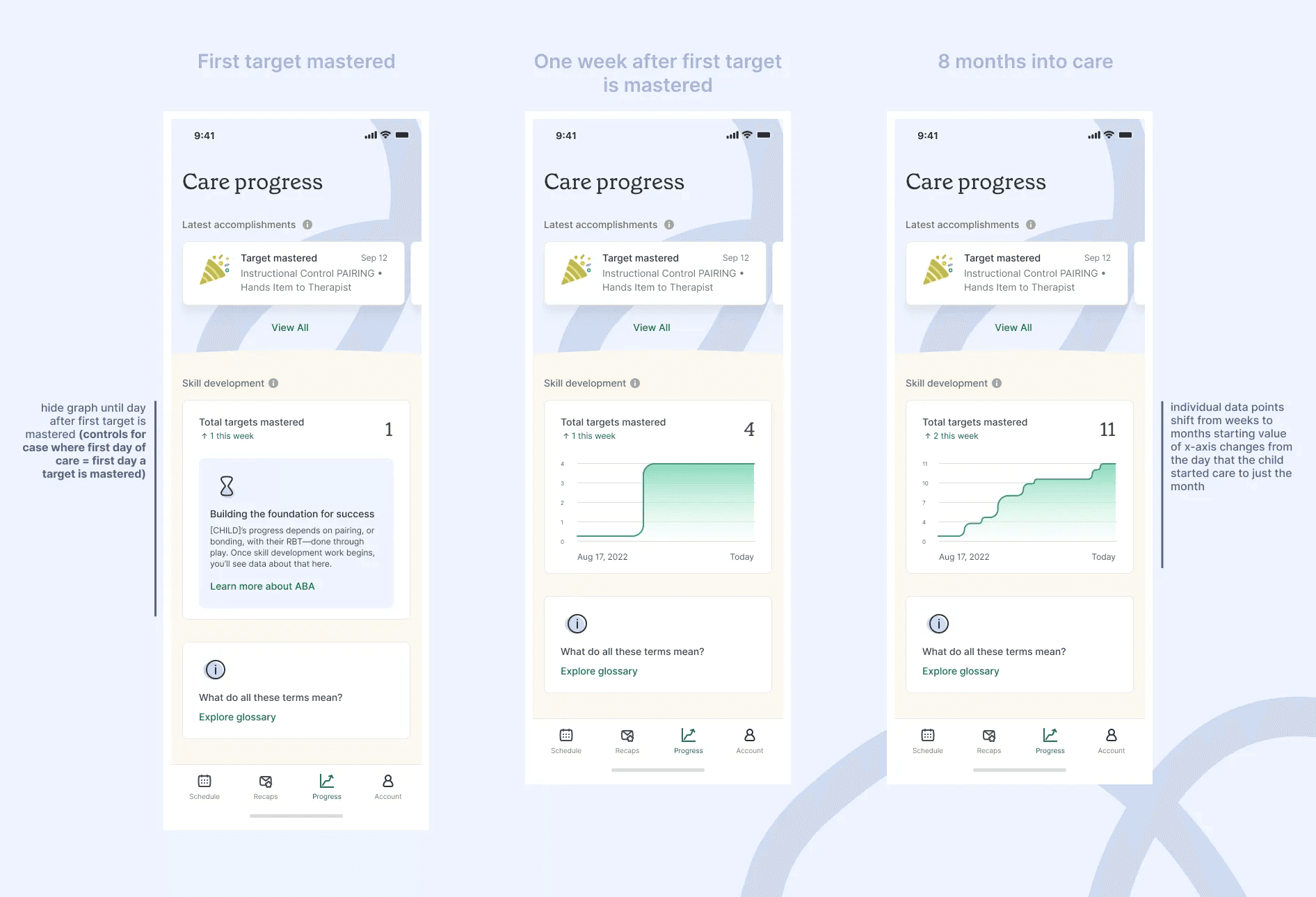
Key design decision: Reframing progress updates
Instead of presenting raw clinical data or lengthy reports, progress updates were restructured around:
Clear summaries of what changed and why it matters
Visual hierarchy that highlights meaningful outcomes first
Consistent patterns that help parents build familiarity over time
This helped parents quickly understand progress without needing to interpret clinical terminology.
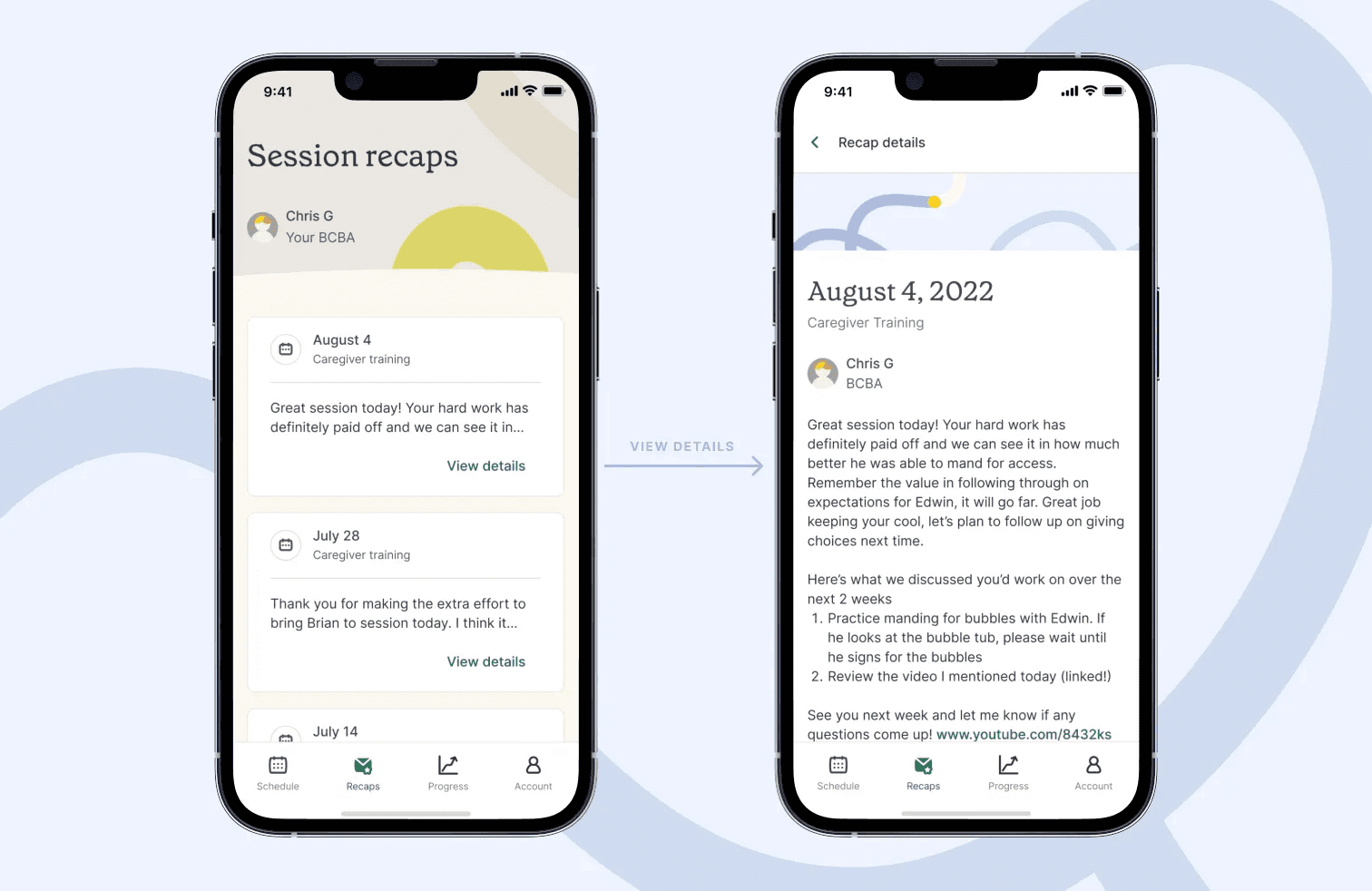
Following the principle of transparency, parents can view treatment notes after each session and track their child's daily work on this screen. The vision of this functionality is to create a chat with the therapist.
The development of this functionality was also part of the effort to mitigate fraud risk. During design, we emphasized the therapy date so that parents can verify whether therapy has taken place.
Reducing coordination load through scheduling design
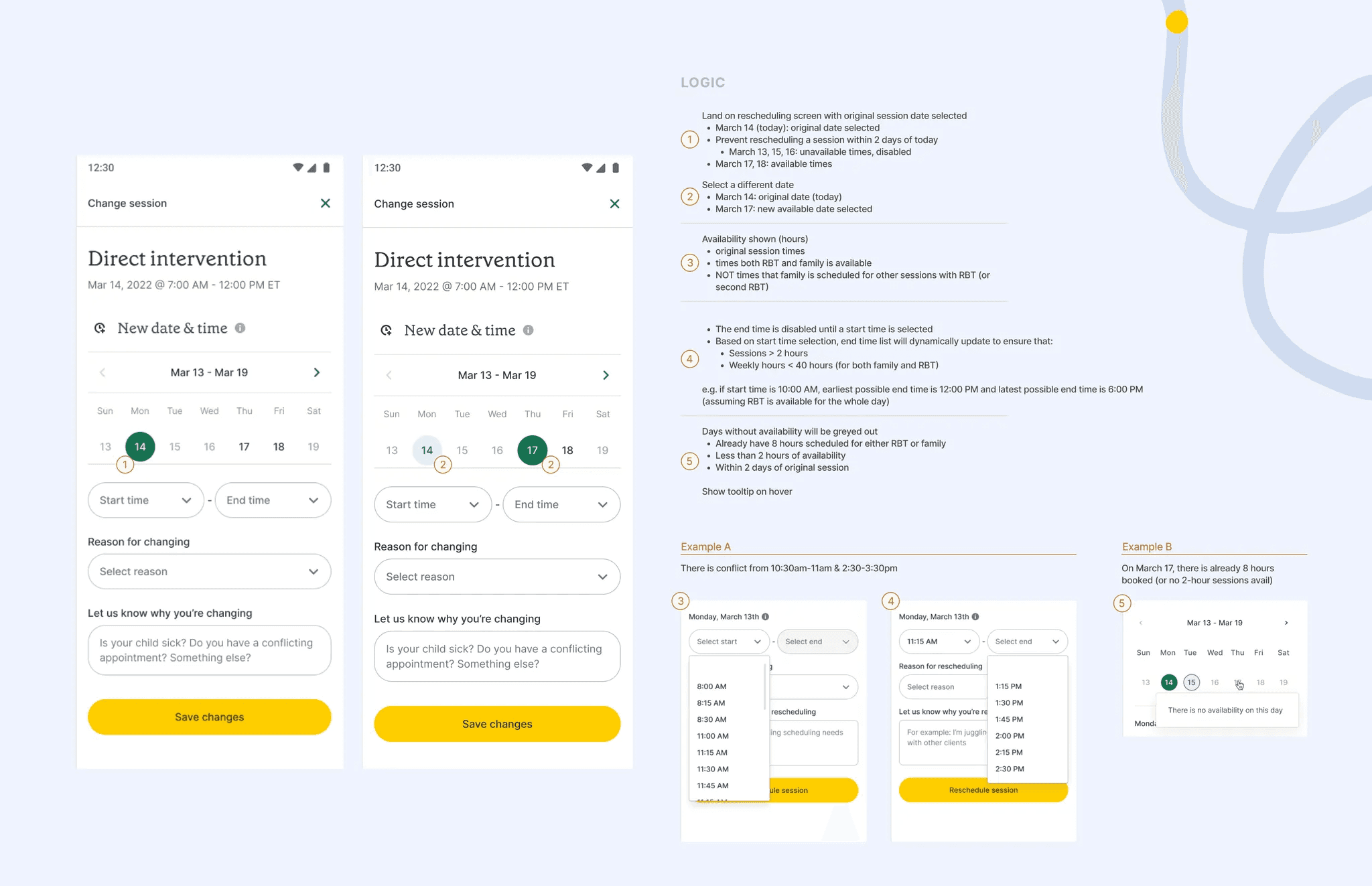
Scheduling is one of the highest-friction workflows in ABA therapy, involving frequent changes, cancellations, and manual coordination.
Rather than treating scheduling as a calendar feature, it was designed as a coordination system that:
Reduces back-and-forth communication
Gives caregivers guided control without exposing operational complexity
Preserves flexibility for care teams and edge cases
The result was fewer interruptions for coordinators and clearer expectations for families.
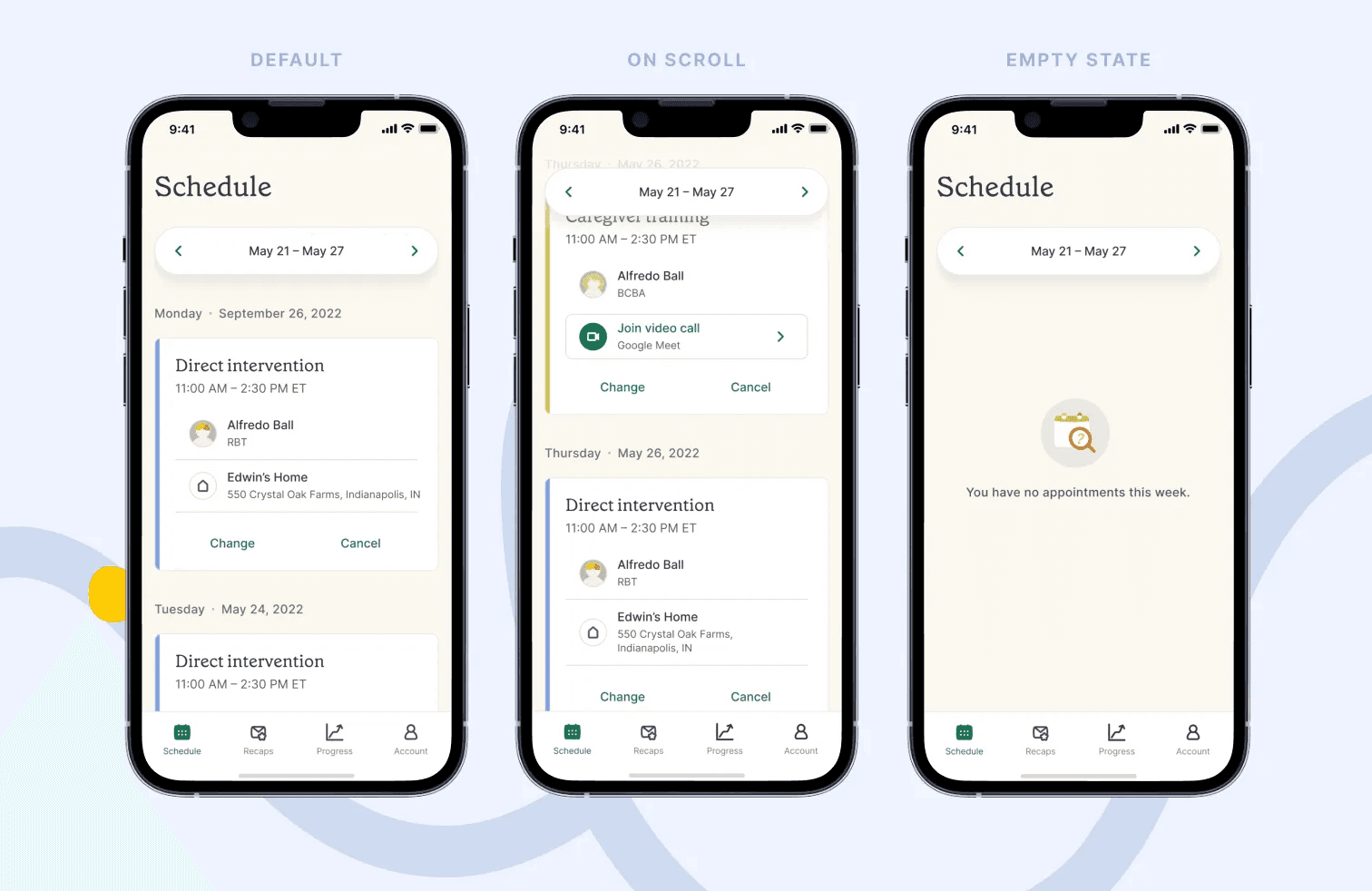
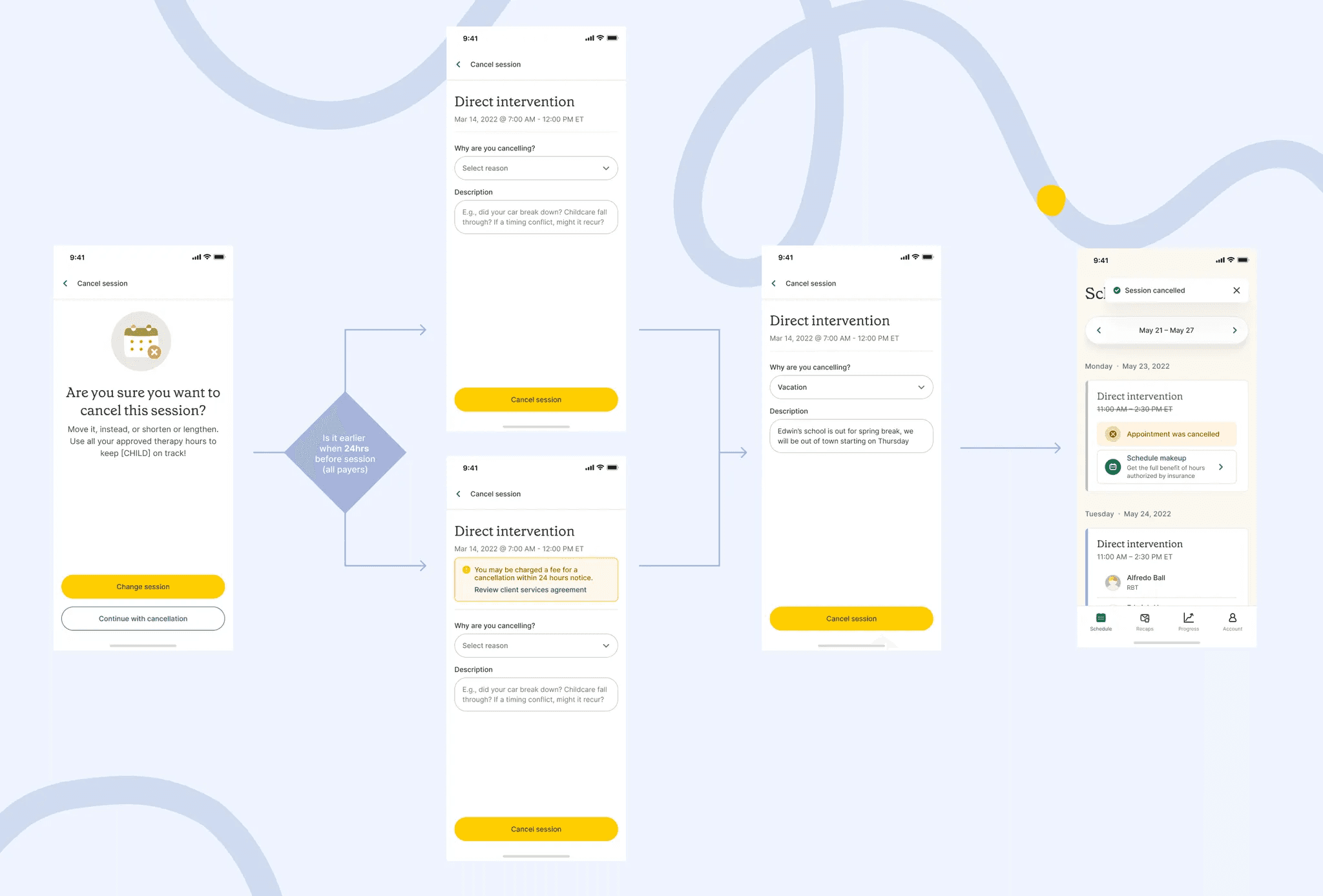
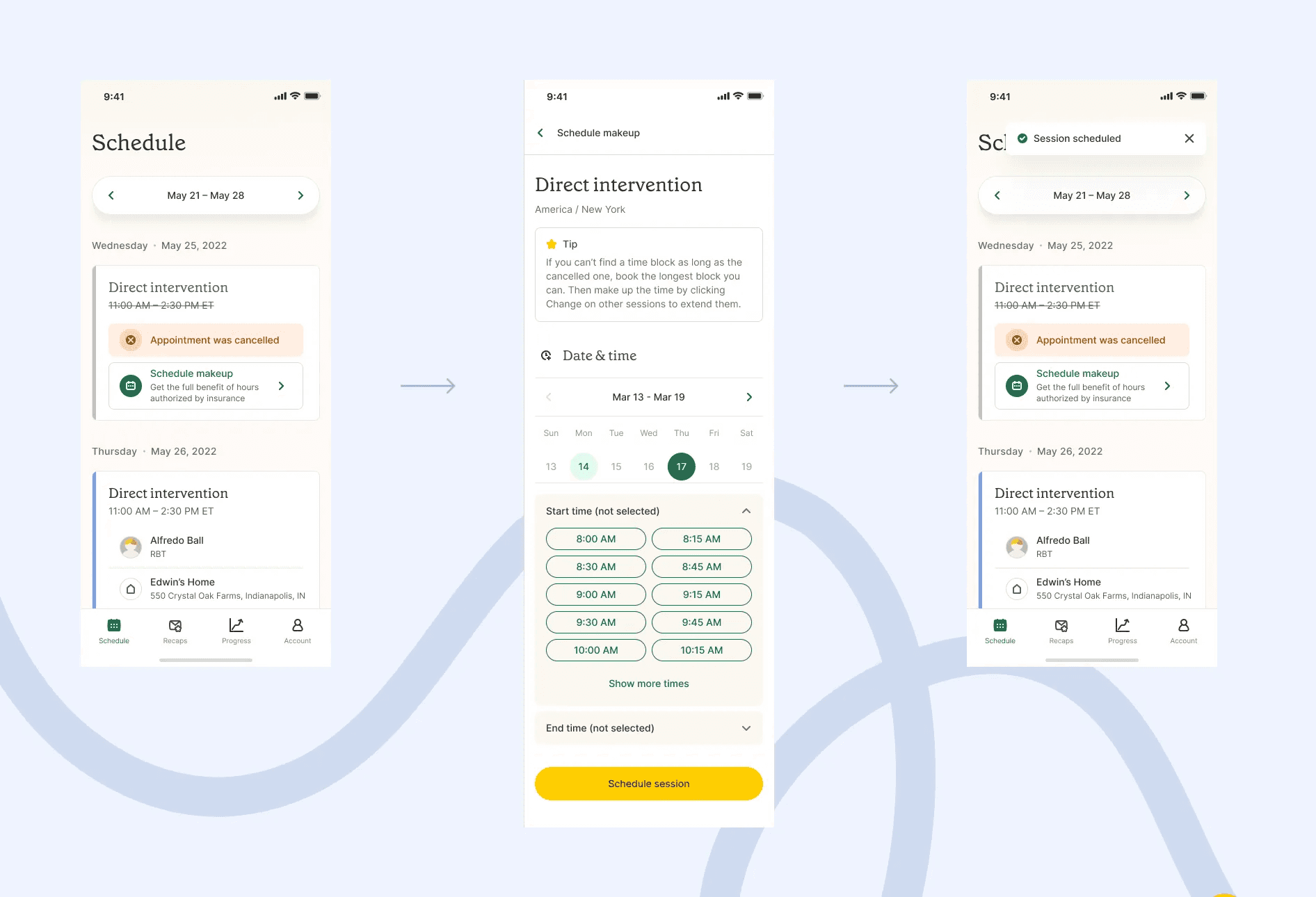
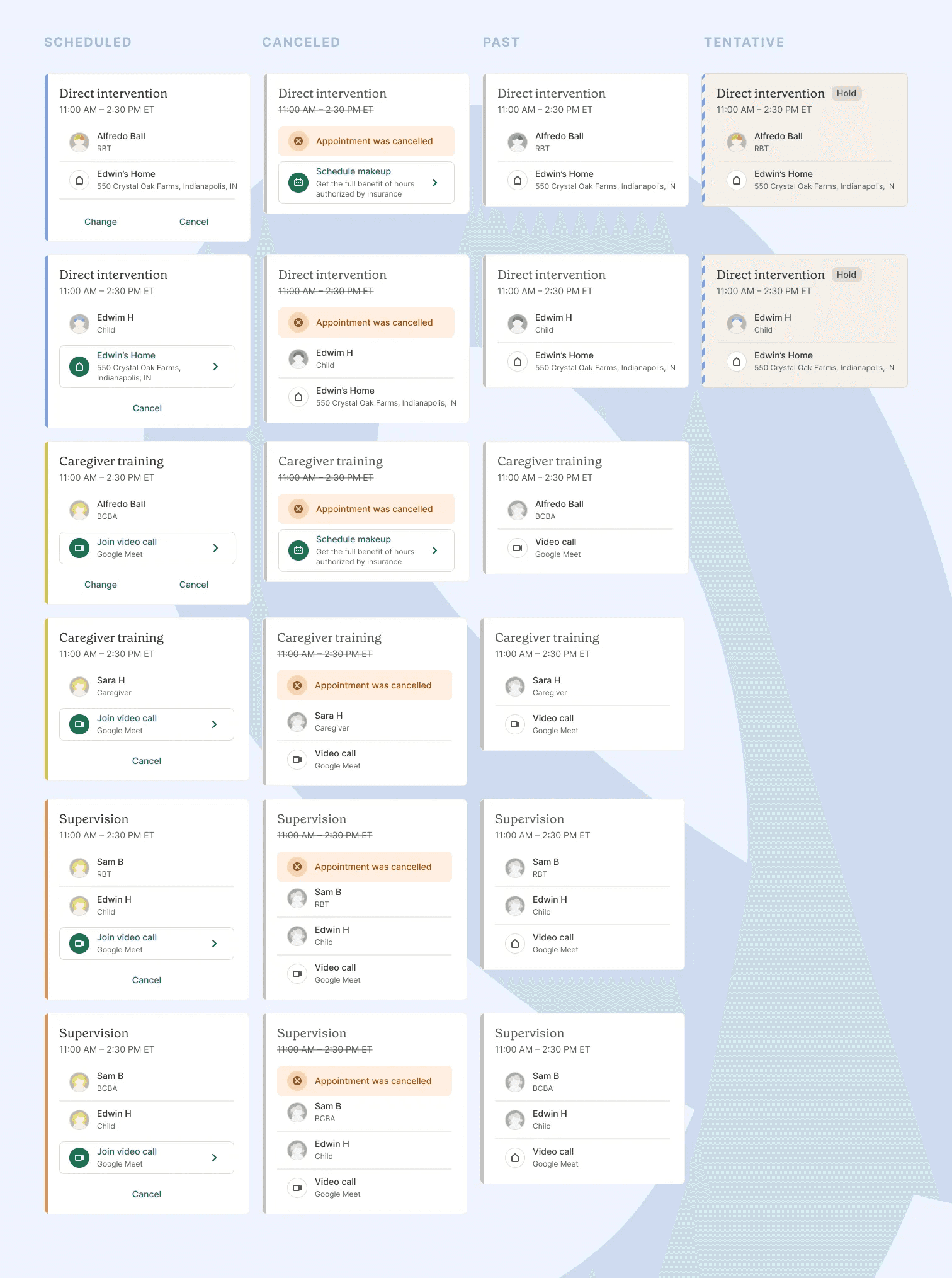
After the interview with our Care Operation team, we defined the states of the appointments and added corresponding components to our design system.
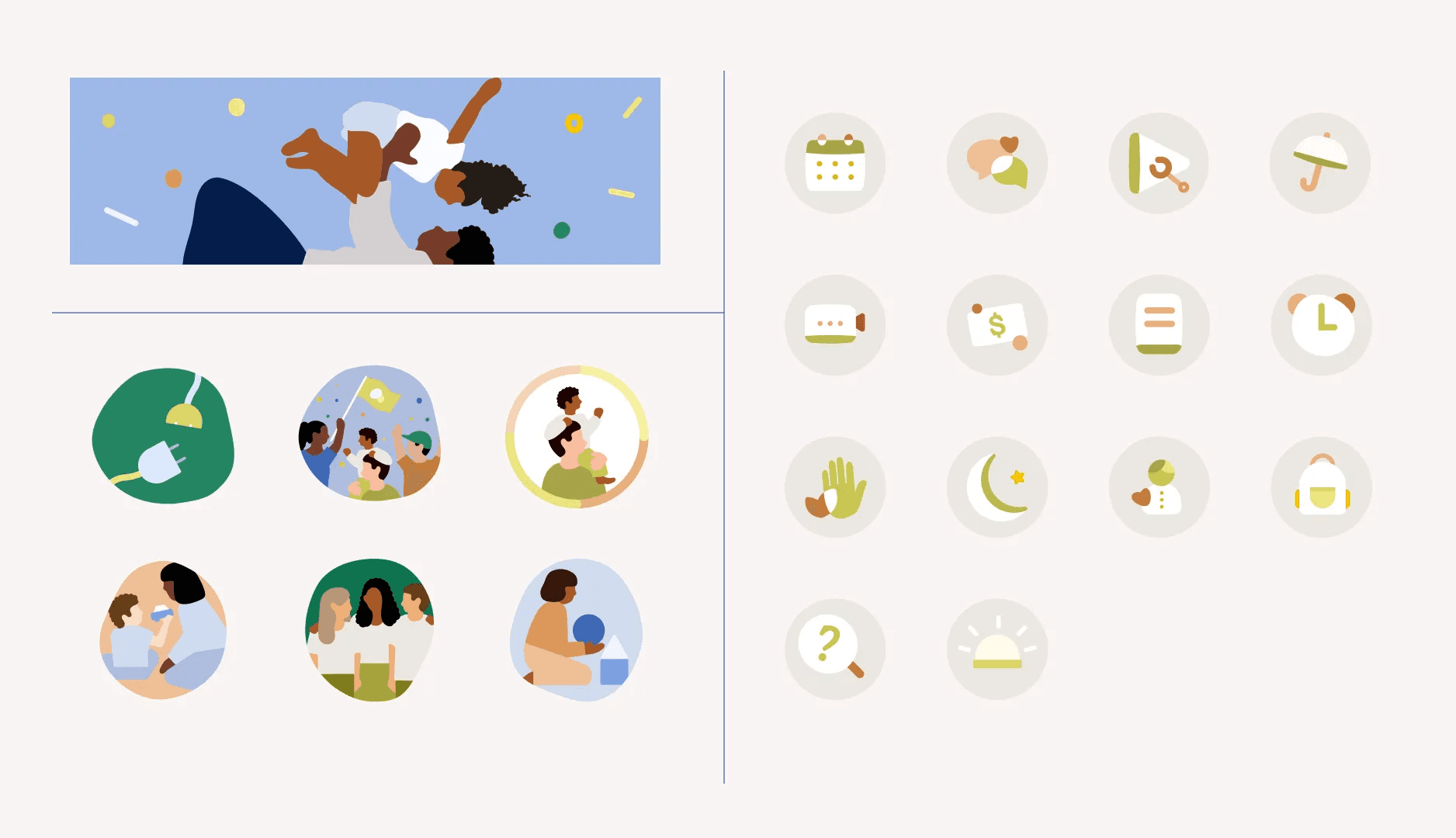
Visual Language: Designing for emotional safety and trust
In a therapy context, visual design directly influences how supported caregivers feel. Rather than aiming for “friendliness,” the visual language was designed to create a consistent sense of care throughout a long and emotionally demanding process.
Soft, flowing shapes, warm muted tones, and human-centered illustrations were used to reduce clinical coldness and reinforce calm, trust, and continuity — responding to the emotional state of caregivers who often engage under stress or uncertainty.
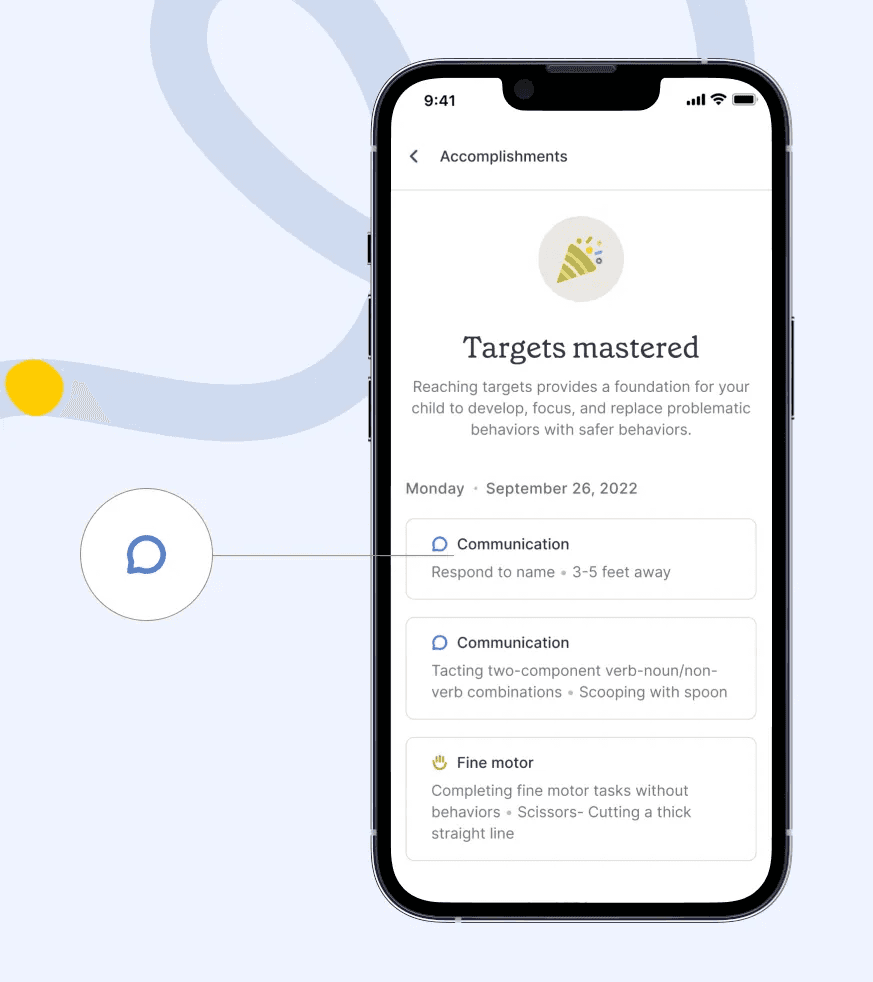
Improving comprehension through visual cues
To make therapy content easier to navigate, each skills category was supported by a consistent set of icons. These visual cues acted as cognitive shortcuts, helping parents:
Scan and recognize areas of progress
Build familiarity without relying on clinical language
Understand content more quickly and confidently
Subtle motion was used to reinforce a sense of care and continuity without distraction. For example, the splash screen animation was designed to set a calm, reassuring tone at the start of each session.
The animation was created in After Effects and delivered via Lottie.
Results & Impact
Reduced operational burden on scheduling teams, cutting manual coordination per family by ~25–30%.
Improved perceived transparency and trust in therapy progress, reflected in higher parent satisfaction and engagement.
Contributed to stronger caregiver retention, with more parents returning to the app throughout the therapy lifecycle.
The product was later used as a flagship example in Series C investor discussions, reinforcing the company’s transition toward a scalable, product-led care model.